Humidity Control in North Central Florida
Are clammy floors and musty odors taking over your home? We diagnose severe moisture issues and restore a comfortable indoor climate.
Scott Niehaus AC, owner-operated since 1994, fixes high indoor humidity for homeowners in Alachua and Gilchrist counties with airflow adjustments and whole-home dehumidifiers. Call (352) 332-9247 to schedule a humidity control assessment.
How do you fix high indoor humidity?
Fixing high indoor humidity takes professional diagnostics and dedicated equipment, because dropping the thermostat cannot out-cool a severe moisture problem.
Are your tile floors feeling slick and clammy, your windows pooling with condensation, or a persistent musty smell greeting you at the front door? You cannot out-cool a severe moisture problem by dropping the thermostat; extracting that heavy water load requires professional diagnostics and dedicated equipment. Since 1994, the EPA-certified technicians at Scott Niehaus Air Conditioning & Heating have been ready to step in, solve your moisture issues, and bring your indoor climate back to a comfortable balance.
What are the signs your home has a humidity problem?
Signs include sweaty windows and clammy surfaces, a musty odor that will not go away, swelling doors and cupping hardwood floors, feeling sweaty at a low thermostat setting, and peeling paint or blistering wallpaper.
Sweaty Windows and Clammy Surfaces
You notice condensation pooling on the inside of your windows, especially in the morning, and your tile floors feel slightly slick to the touch. Mechanically, this means the dew point inside your home is completely out of balance, and your air conditioning system is failing to remove the latent moisture from the indoor air. Constant condensation on window sills and baseboards leads directly to wood rot and peeling paint, turning a simple humidity issue into an expensive carpentry problem.
The Musty Odor That Will Not Go Away
No matter how much you clean or how many air fresheners you use, there is a persistent, earthy smell in the home that usually smells strongest near air vents. This smell is the off-gassing of microbial growth thriving inside your ductwork, on your evaporator coil, and in dark areas of the home when humidity sits above sixty percent. Breathing in microbial off-gassing degrades your indoor air quality and often requires a heavy-duty chemical pull-and-clean of your system to resolve.
Swelling Doors and Cupping Hardwood Floors
Your interior doors are suddenly sticking in their frames, and the edges of your hardwood or laminate floor planks are starting to raise up into a cupped appearance. Wood acts like a sponge, absorbing excess moisture from the air and physically expanding when ambient humidity remains too high for extended periods. If the moisture level is not controlled quickly, this cupping becomes permanent, requiring the floors to be completely sanded down and refinished at a massive cost.
You Are Freezing But Still Sweating
You have the thermostat set to a chilly sixty-nine degrees, but you still feel sticky and find yourself constantly adjusting the temperature trying to find a sweet spot. When there is too much moisture in the air, your sweat cannot evaporate from your skin, completely neutralizing your body's natural cooling mechanism. Continually dropping the temperature just overworks your compressor and skyrockets your utility bills without actually solving the root cause of your discomfort.
Peeling Paint and Blistering Wallpaper
When airborne moisture has nowhere to go, it eventually permeates the drywall and gets trapped behind your interior wall coverings. You will start to notice the paint in your bathrooms or living areas bubbling up, or the seams of your wallpaper beginning to peel away from the wall. This is a massive red flag that your home is holding excess water vapor, requiring immediate mechanical dehumidification before structural rot sets in behind the drywall.
What causes poor humidity control?
Common causes include an oversized AC system, leaky ductwork in humid attics or crawlspaces, high moisture loads without dedicated dehumidification, a fouled or freezing evaporator coil, and poor exhaust ventilation in kitchens and bathrooms.
The AC System is Oversized for the Home
A homeowner often thinks bigger is better and installs an oversized AC unit that blasts the house with cold air, satisfying the thermostat very quickly. Because the system shuts off so fast, it never runs long enough to pull the moisture out of the air, creating a condition known as short-cycling. The solution usually involves assessing the system airflow, adjusting blower speeds, or installing a dedicated whole-home dehumidifier to handle the massive moisture load.
Leaky Ductwork in Swampy Attics or Crawlspaces
North Central Florida attics and vented crawlspaces are notoriously hot and humid, and any tear in your return ductwork acts like a vacuum sucking that swampy air into your living room. Your air conditioner was never designed to dehumidify the outside air, meaning it will run continuously while failing to dry out the house. The fix requires a thorough duct inspection where we get into the attic, locate the breaches, and properly seal them with mastic.
High Moisture Loads Without Dedicated Dehumidification
Sometimes the AC is working exactly as it should, but the moisture load in the home is just too high due to tight construction or cooking. A standard air conditioner is not a dedicated dehumidifier; it just removes moisture as a byproduct of cooling the air during a normal cycle. When the moisture load outpaces the cooling demand, integrating a whole-home dehumidifier directly into your ductwork allows you to pull gallons of water out of the air independently.
A Fouled or Freezing Evaporator Coil
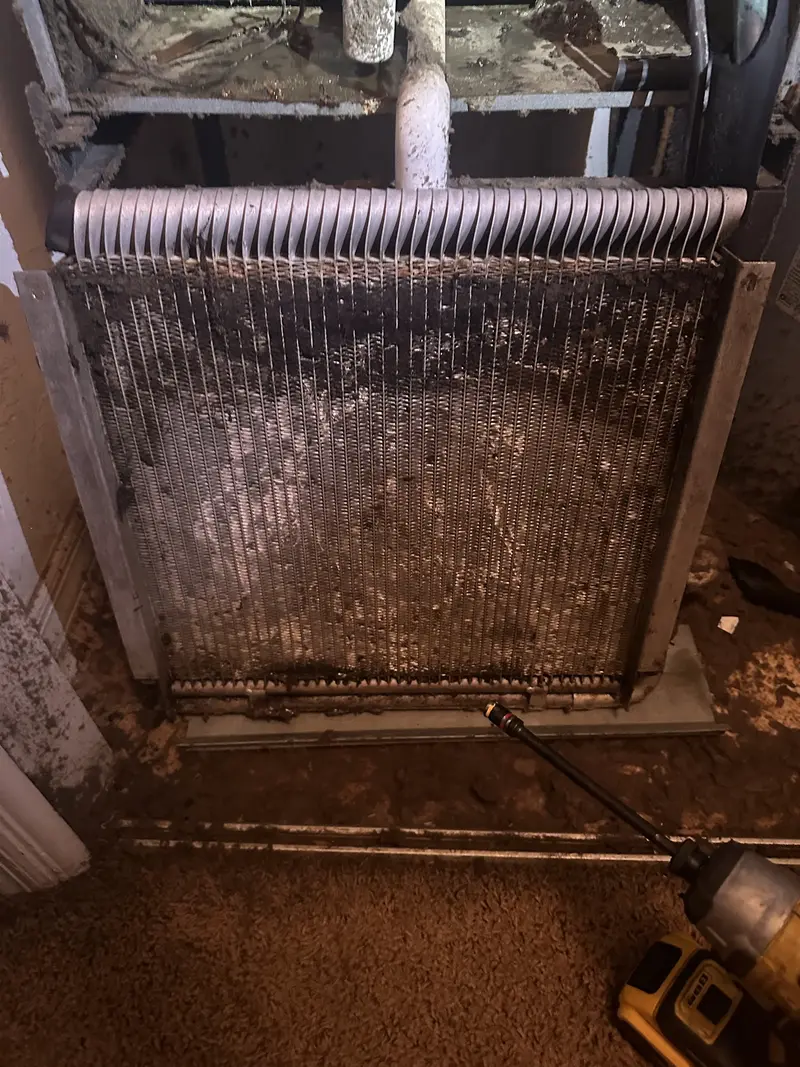
Your evaporator coil is responsible for extracting heat and moisture, but if it is caked in biological growth or dust, it loses its ability to transfer thermal energy. A dirty coil cannot pull moisture out of the air efficiently, leaving your home feeling sticky while the system runs constantly and struggles to drain condensate. Cleaning the coil restores its capacity to properly dehumidify the air passing through your air handler and prevents the system from freezing over entirely.
Poor Exhaust Ventilation in High-Moisture Areas
Bathrooms and kitchens generate massive amounts of steam and moisture on a daily basis through showers, boiling water, and dishwashers. If your exhaust fans are broken, undersized, or venting directly into your attic instead of outside, all that humidity stays trapped inside the building envelope. Over time, this localized moisture spreads throughout the house, forcing your HVAC system to work overtime trying to dehumidify an impossible load.
What happens during a humidity control assessment?
Technicians map relative humidity and dew point with digital hygrometers, check thermostat settings and duct static pressure, time your cooling cycles, and inspect the evaporator coil and the attic or crawlspace ductwork.
When our technicians arrive at your home, we do not just guess at the problem or throw equipment at the wall to see what sticks. We start by taking objective measurements using digital hygrometers to map the relative humidity and dew point in different zones of your house. We will inspect your thermostat settings, measure the static pressure in your ductwork, and run your system to clock how long the cooling cycles actually last under normal conditions.
Next, we evaluate the equipment by checking the evaporator coil to see if it is properly draining the condensate or if it is fouled up with biological growth. We will also inspect the ductwork in the attic or crawlspace for any obvious breaches pulling in unconditioned air from outside the thermal envelope. Because we are an owner-operated team serving North Central Florida, Scott Niehaus Air Conditioning & Heating knows exactly what it takes to beat the local moisture levels and protect your home.
Humidity Control Coverage Across North Central Florida
Every home handles moisture differently, but our EPA-certified technicians bring the same rigorous diagnostic approach to every call across the region. We measure the moisture, inspect the airflow, and implement a lasting fix so you can stop fighting your thermostat and start enjoying your home again.
Communities We Serve: Gainesville, FL, Newberry, FL, Alachua, FL, High Springs, FL, Archer, FL, Jonesville, FL, Waldo, FL, Hague, FL, Trenton, FL, Worthington Springs, FL, Williston, FL
What services pair with humidity control?
Air purifiers and mechanical ventilation work hand-in-hand with humidity control so the air you breathe is not just dry, but actually clean.
When a home suffers from chronic high humidity, the air quality often takes a hit because heavy moisture allows dust mites to thrive and encourages microbial growth inside the ductwork. Once we get the moisture levels under control, it is a good time to address the lingering airborne contaminants that have built up over time. Integrating professional air purifiers or setting up proper mechanical ventilation systems works hand-in-hand with humidity control to ensure the air you breathe is not just dry, but actually clean.
Take Back Your Indoor Comfort
You should not have to live in a home that feels sticky, smells musty, or forces you to freeze just to get a break from the muggy air. Ignoring a humidity problem actively damages your property, degrades your indoor air quality, and forces your air conditioner into an early grave.
Let the experts who have been serving North Central Florida since 1994 properly diagnose and solve your moisture issues once and for all. Reach out to Scott Niehaus Air Conditioning & Heating today to schedule your humidity control assessment.
From our job sites
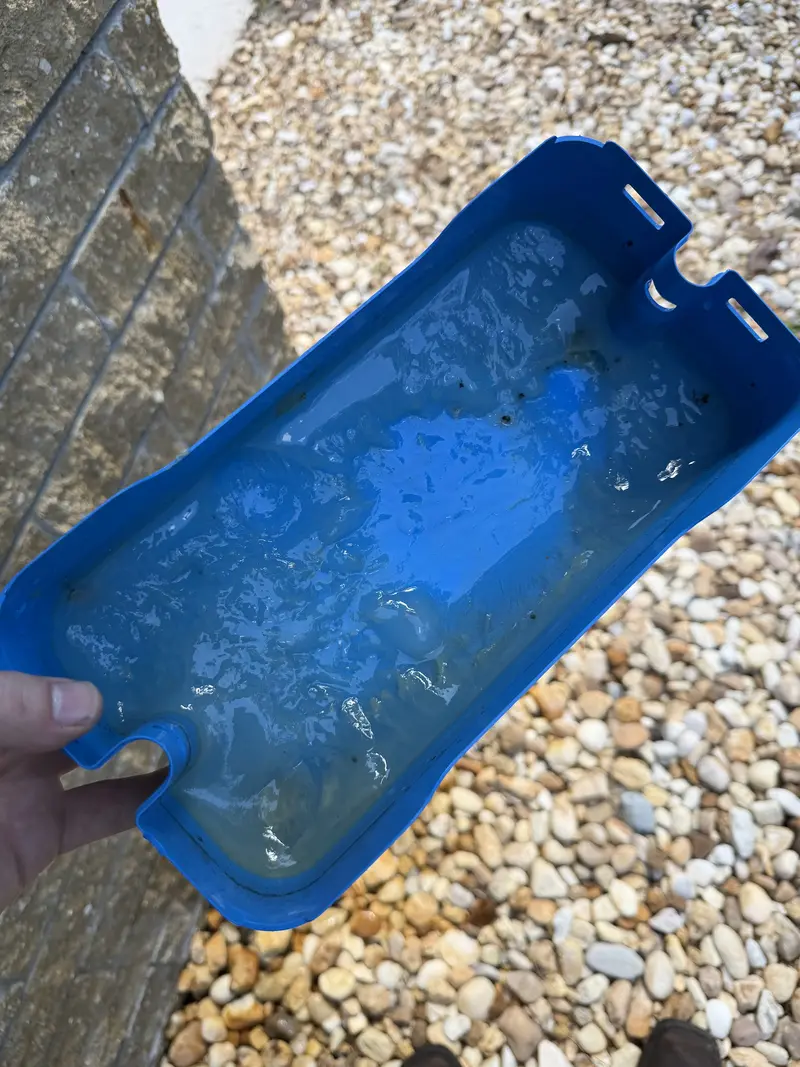
Moisture problems from our job sites
Request Service
Tell us what's going on
Free estimates on system replacements. Repairs start with a $125 diagnostic.