
Air-tight homes and ventilation
Newer homes are built tighter, which saves energy but can trap stale air inside. A ventilator brings in fresh air and holds on to much of the heating or coolin…
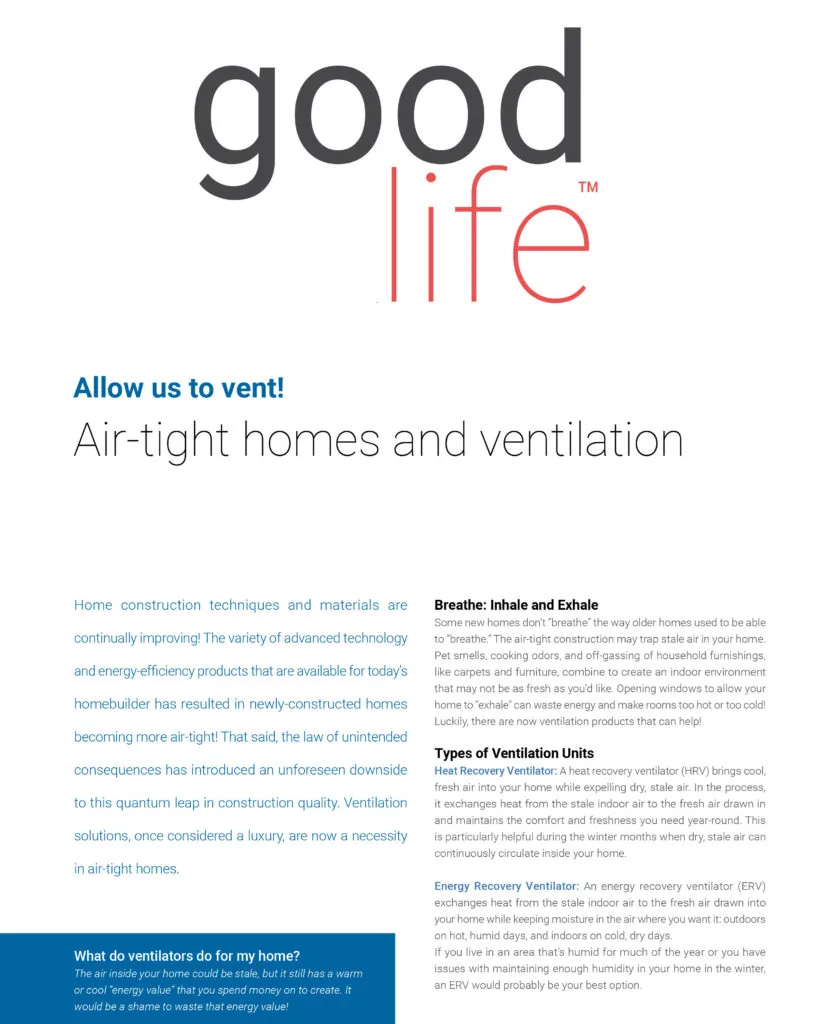
Newer homes are built tighter, which saves energy but can trap stale air inside. A ventilator brings in fresh air and holds on to much of the heating or cooling you already paid for.
The infographic explains that building methods and materials keep getting better. Today's energy-saving products have made new homes much more air-tight. That has one downside. Stale air has fewer ways to get out. Ventilation, once seen as an extra, is now a need in air-tight homes.
Why can an air-tight home feel stuffy?
Older homes used to "breathe." Some new homes do not. Their tight construction can trap stale air inside. Smells and fumes can build up from:
- Pets
- Cooking
- Household furnishings like carpets and furniture, which can release gases over time
Opening windows lets the house breathe out, but it can waste energy and make rooms too hot or too cold.
What does a ventilator do for your home?
The air inside your home may be stale, but it still holds the warmth or coolness you spent money to create. The infographic calls this its "energy value." A ventilator swaps stale indoor air for fresh outdoor air without throwing all of that value away.
What is the difference between an HRV and an ERV?
A heat recovery ventilator (HRV) brings fresh air into your home and sends dry, stale air out. Along the way, it trades heat between the outgoing air and the incoming air. This helps keep your home comfortable and fresh all year. The infographic says an HRV is most helpful in winter, when dry, stale air can keep circulating inside.
An energy recovery ventilator (ERV) also trades heat between the two air streams. It also helps keep moisture where you want it. That means outdoors on hot, humid days and indoors on cold, dry days. The infographic says that if you live where it is humid much of the year, or if your home gets too dry in winter, an ERV is probably the better choice.
How do you know which one is right for you?
The right choice depends on your home, your current system and how you use it. A technician can look at your home and explain your options. Learn more about our home ventilation services.
Have a question about your heating or cooling system? Call Scott Niehaus Air Conditioning and Heating at (352) 332-9247 or request service online.
Request Service
Tell us what's going on
Free estimates on system replacements. Repairs start with a $125 diagnostic.
Talk to a real Gainesville technician.
Tell us what's going on and we'll get back to you during business hours (Mon–Fri, 8 AM – 5 PM). For an emergency, call us — after hours you'll reach our on-call technician or emergency voicemail.
Call for immediate AC service(352) 332-9247- After-hours emergency line
- FL License CAC057109
- Owner-operated since 1994
- Alachua & Gilchrist counties
14260 W Newberry Rd #365, Newberry, FL 32669
Request your service
No obligation. We never sell your info.